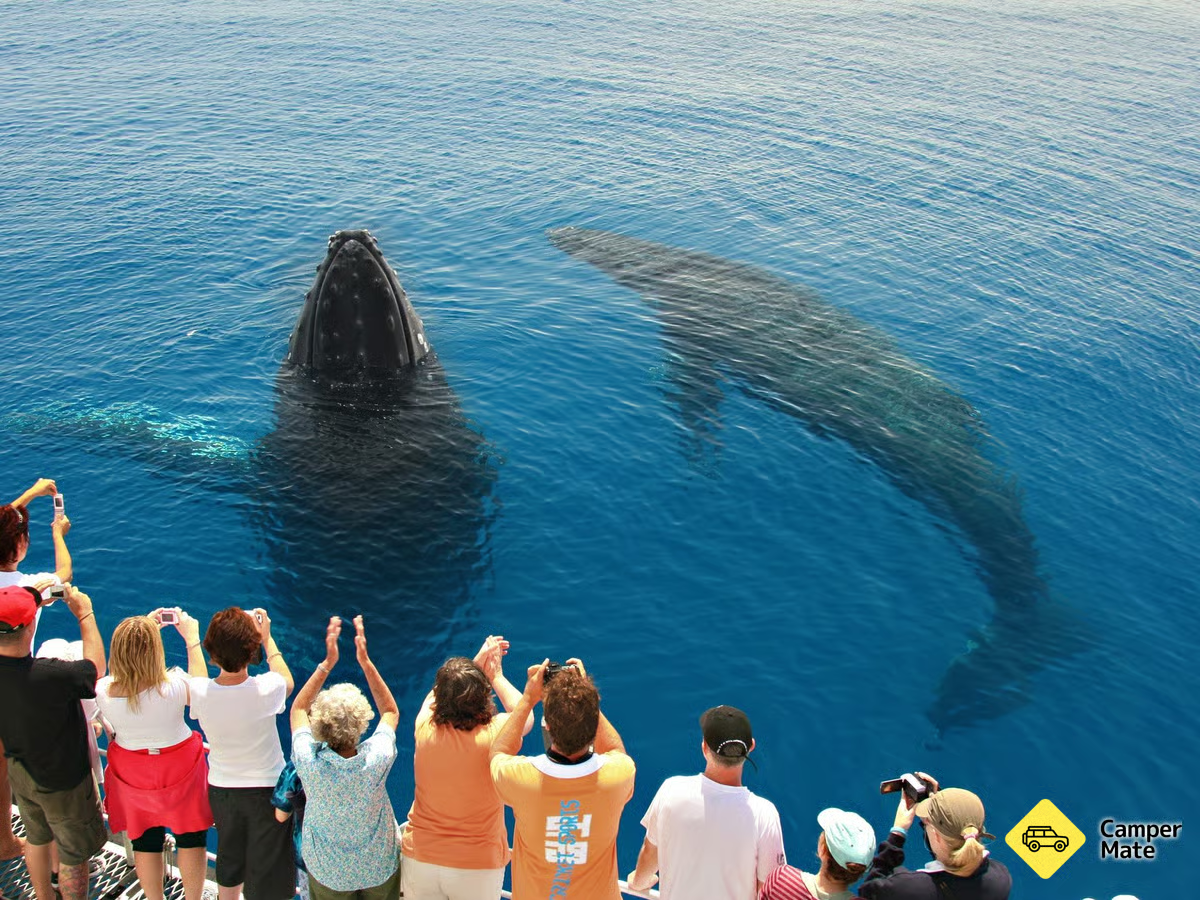
Best Places to See Whales in Australia This Winter
Winter is one of the best times of year to hit the road in Australia – and you don't have to head inland to find some of the country's most impressive wildlife.
From May onwards, tens of thousands of whales begin their annual migration along Australia's coastline. Humpbacks travel north into warmer waters before turning south later in the year, while southern right whales arrive along Australia's southern coast to breed and raise their calves.
That means winter is prime time for whale watching, with opportunities to see these enormous animals from coastal cliffs, beaches, lookouts and boats.
Whether you're planning a coastal road trip through NSW, chasing wildlife in Western Australia, exploring Queensland's tropical coast, or uncovering the secrets of Tasmania, here are some of the best places to see whales in Australia this winter.
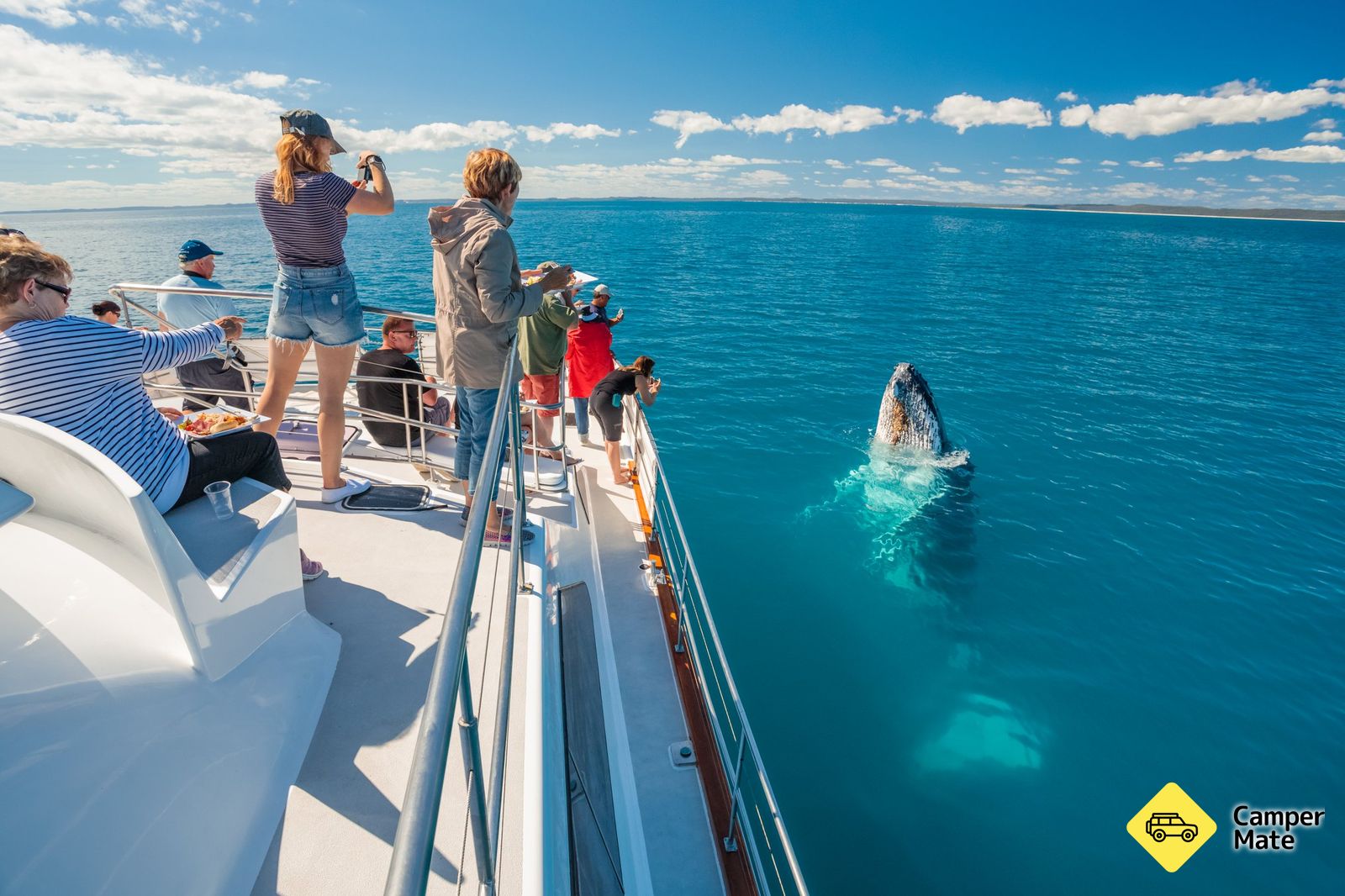
Explore all the Whale Watching Tours on CamperMate
When is whale watching season in Australia?
Whale watching season generally runs from May to November, but the best time to see whales varies depending on where you're travelling.
During the winter months of June, July and August, humpback whales are generally making their way north along Australia's eastern and western coastlines. Later in the year, they begin the return journey south, often travelling with calves.
Further south, winter brings a different spectacle. Southern right whales return to sheltered coastal waters in Victoria, Western Australia and Tasmania to breed, then give birth and nurse their young.
So, wherever your winter road trip takes you, there's a good chance whales are passing somewhere along the coast, and this guide is all about making sure you don't miss out on some awesome opportunities to see them when they do!
New South Wales
New South Wales is one of Australia's easiest places to combine a road trip with whale watching. Humpbacks travel close to the coast, creating plenty of opportunities to spot them from headlands, beaches and coastal walking tracks.
Jervis Bay
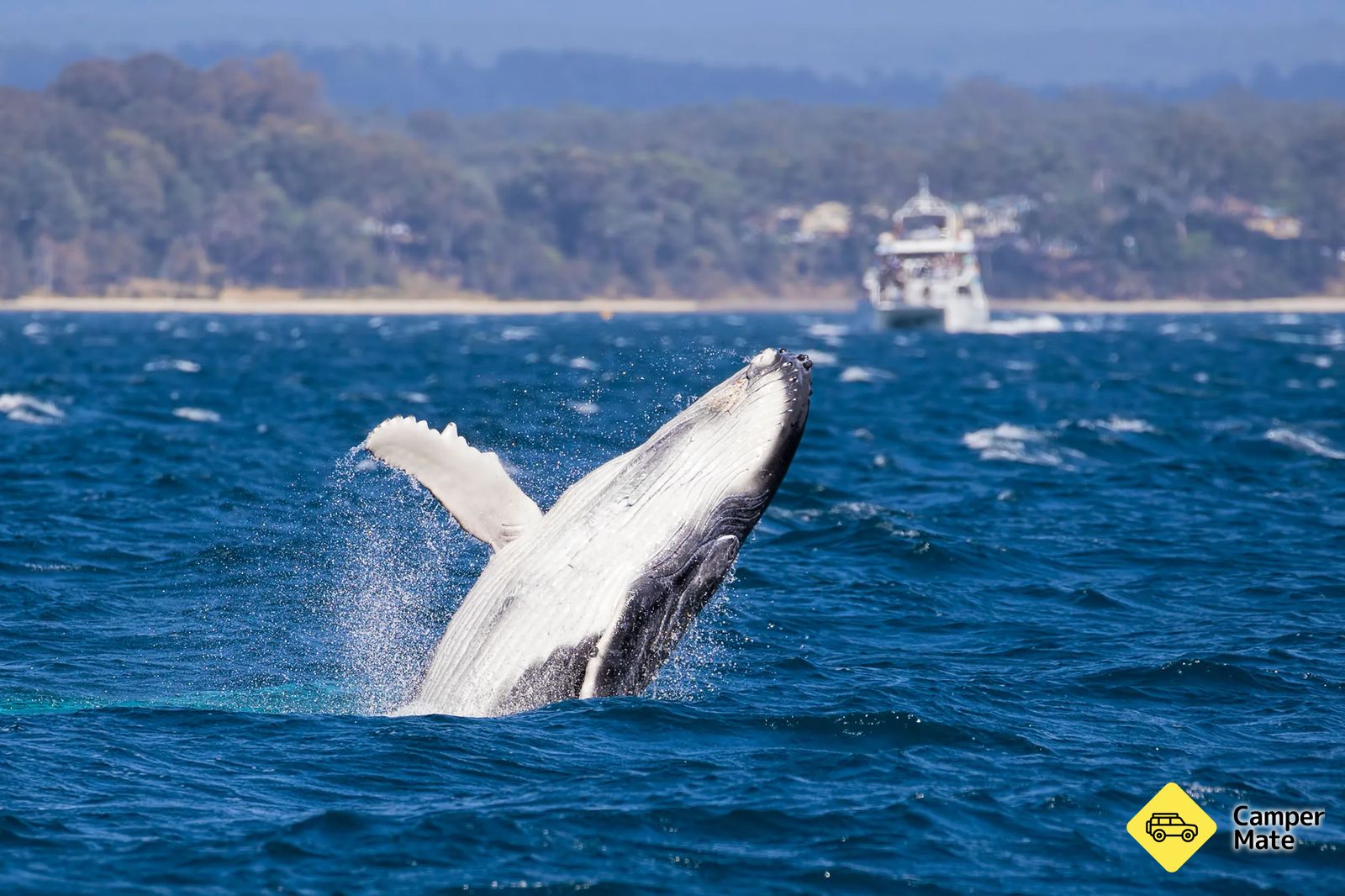
Best time: May to November
The white sands and clear waters of Jervis Bay are reason enough to visit, but winter brings another attraction to this beautiful stretch of the NSW South Coast.
Humpback whales pass the bay during their annual migration, with sightings possible throughout the season. Later in the year, mothers and calves can be seen using the calmer waters around the bay to rest before continuing south.
You can explore the coastline from land or head offshore on a dedicated whale-watching tour.
Where to find whales?
Best for: Combining whale watching with beaches, coastal walks and a South Coast road trip.
Where to stay: Tasman Holiday Parks - Myola.
Queensland
Queensland's warm winter weather makes it a natural choice for a road trip, and its coastline becomes a major thoroughfare for migrating humpbacks. From the Capricorn Coast to Hervey Bay, and north to the Great Barrier Reef, there are some truly unique ways to encounter them.
Capricorn Coast
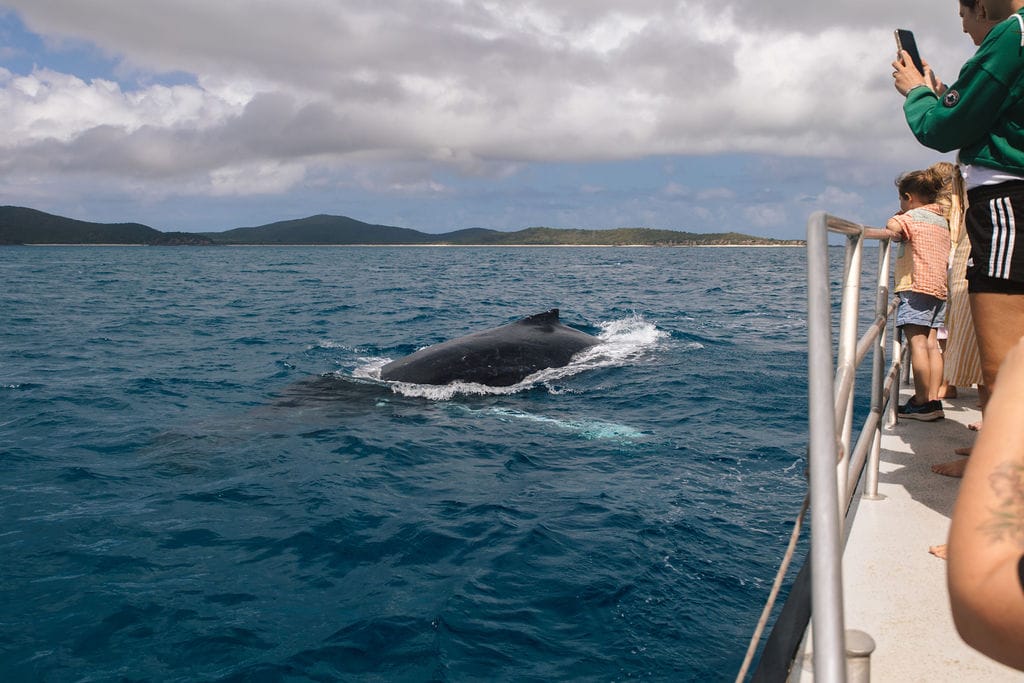
Best time: June to October
The Capricorn Coast offers not only one of the most affordable whale watching cruises in Australia, but also plenty of easy, land-based opportunities to spot migrating humpback whales without even needing to get on a boat! With sweeping views across Keppel Bay, you can settle in at a lookout, enjoy the beach or simply watch from your holiday accommodation.
Where to find whales:
- Book the Keppel Island Whale Watching Cruise
- Wreck Point Scenic Lookout
- Double Head
- Singing Ship Monument
Best for: Easy, affordable family-friendly cruise or land-based whale watching with spectacular coastal views.
Where to stay: Tasman Holiday Parks - Fisherman's Beach
Hervey Bay
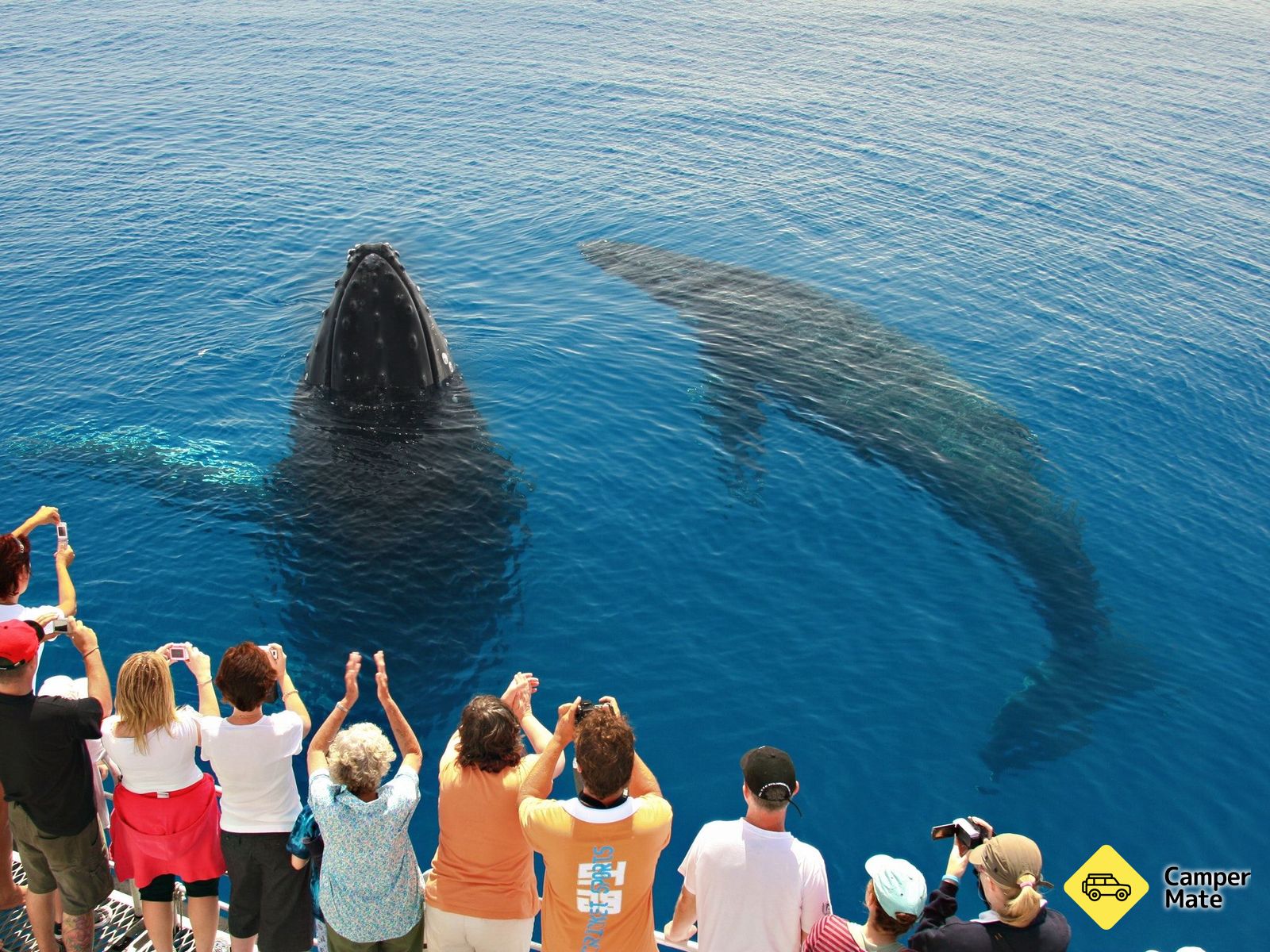
Best time: July to November
If there's one Queensland destination that deserves a place on any whale-watching road trip, it's Hervey Bay.
Located alongside K'gari, the sheltered waters of the bay provide an important resting area for migrating humpback whales. Rather than simply passing through, whales can spend considerable time here, giving visitors the chance to observe their behaviour.
Boat tours may bring you within viewing distance of breaching whales, tail slaps and curious animals approaching the vessel. You may even hear them underwater using a boat's hydrophone.
Where to find whales:
Best for: Classic humpback whale watching and close encounters from a boat.
Where to stay: Tasman Holiday Parks - Hervey Bay | Tasman Holiday Parks - Torquay Palms | Tasman Holiday Parks - Fraser Coast.
Great Barrier Reef
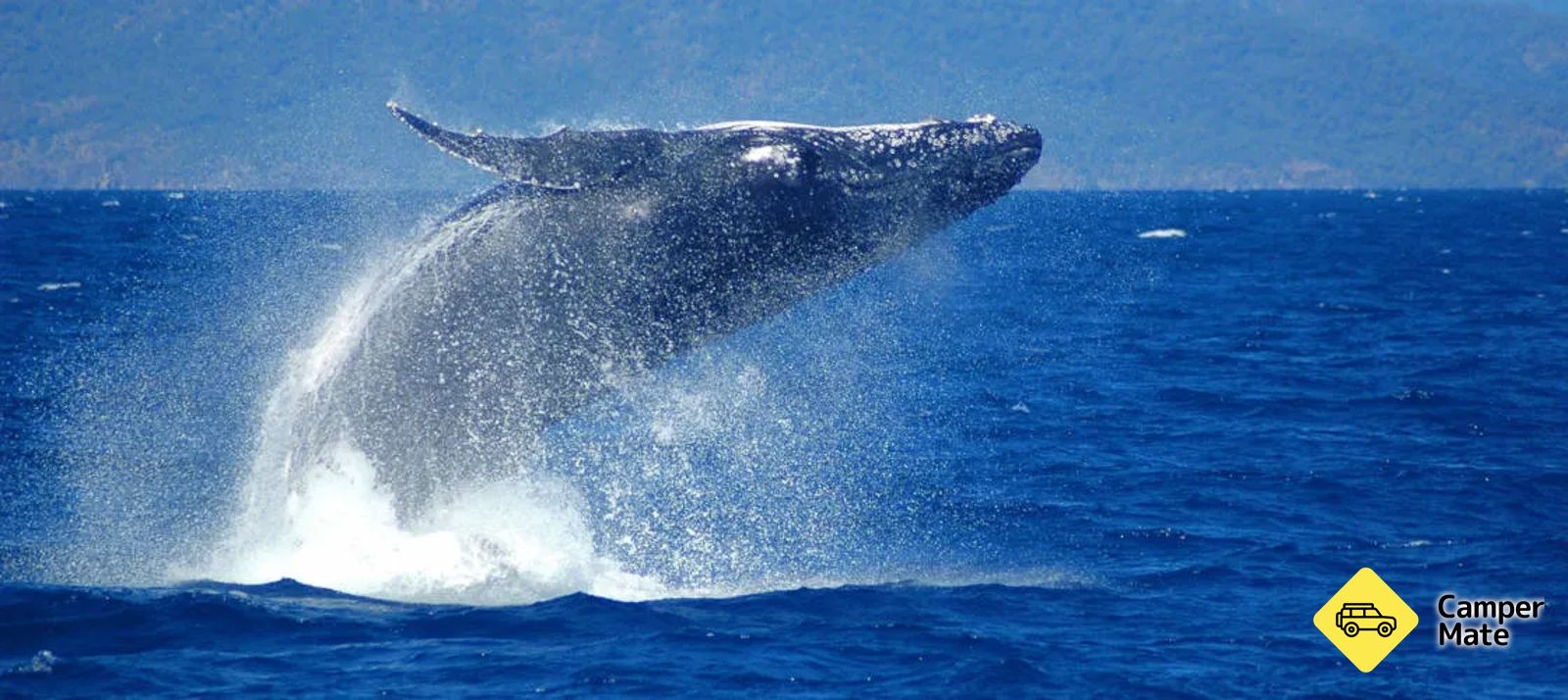
Best time: June and July
For something completely different, head north to the Great Barrier Reef.
Each winter, dwarf minke whales pass through the remote Ribbon Reefs. These smaller members of the whale family are known for their curious nature and can sometimes approach boats and swimmers.
Specialist expeditions offer the rare opportunity to enter the water with these whales, with encounters carefully managed to ensure the animals remain in control of the interaction.
It's one of the most unusual wildlife experiences you can have in Australia – and one that is only available for a short period each year.
Where to find whales"
Best for: A truly bucket-list wildlife encounter.
Where to stay: Tasman Holiday Parks - Cairns Cool Waters.
Western Australia
Western Australia offers an incredible variety of whale experiences. Along its enormous coastline, you can see humpbacks migrating north, southern right whales calving and, in some locations, encounter more than one species in the same trip.
South West WA
Best time: May to November
The South West is a fantastic all round whale watching destination, with different species appearing at different times of year.
During winter, humpbacks travel through the waters around Augusta, with whale-watching experiences offering the chance to see them alongside southern right whales, dolphins and migratory seabirds.
As the season progresses, the action moves further along the coast towards Dunsborough.
Best for: Adding whale watching to a South West WA road trip | Seeing different whale species in one spectacular coastal setting.
Dunsborough and Busselton
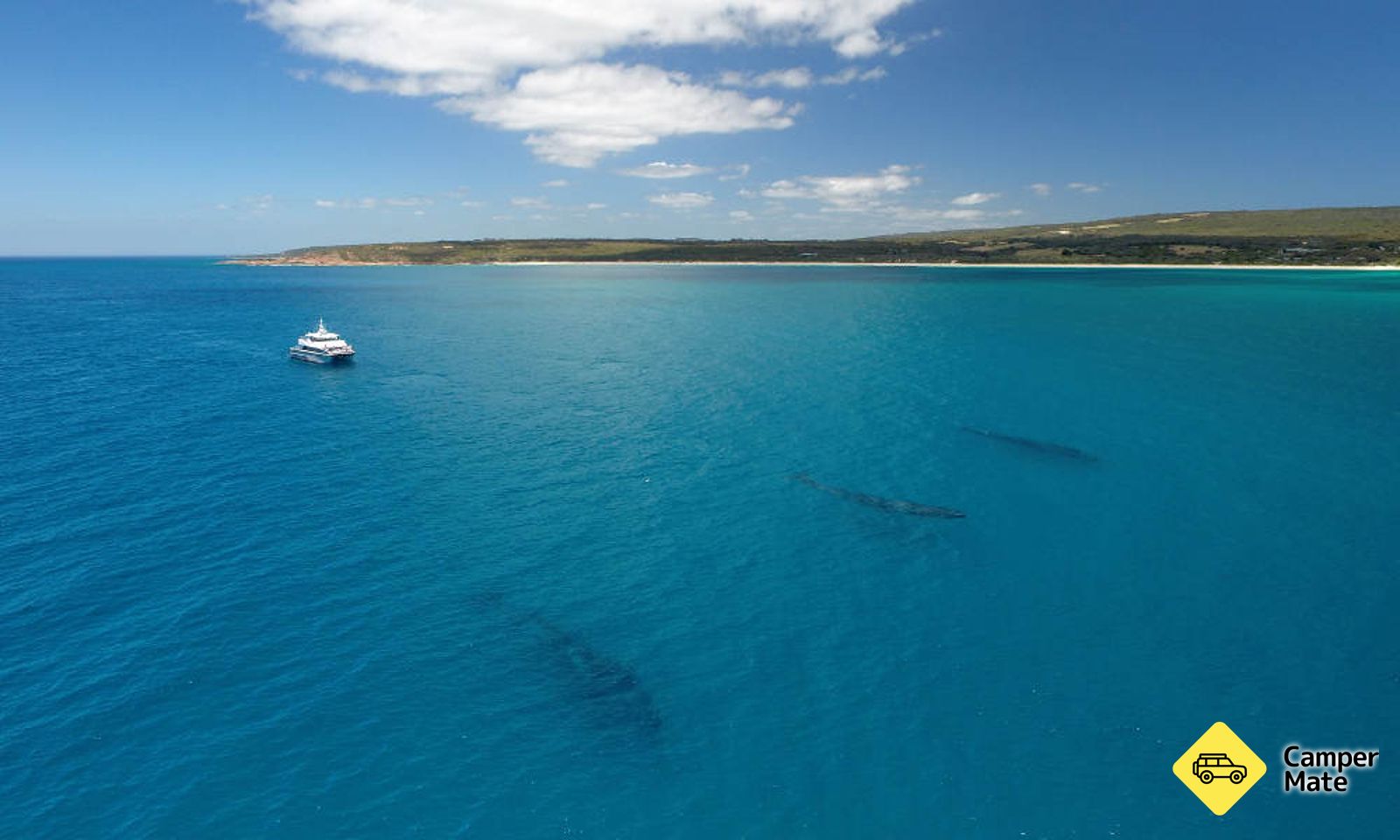
Best time: August to November
The whale-watching season in Dunsborough and Busselton, Western Australia, runs from mid-August through November. During these months, the calm and protected waters of Geographe Bay serve as a rest stop for Humpback whales, Southern Right whales, and occasionally Blue whales on their migration south.
Where to see whales:
Where to stay: Tasman Holiday Parks - Yallingup Beach | Tasman Holiday Parks - Yallingup Caves.
Albany
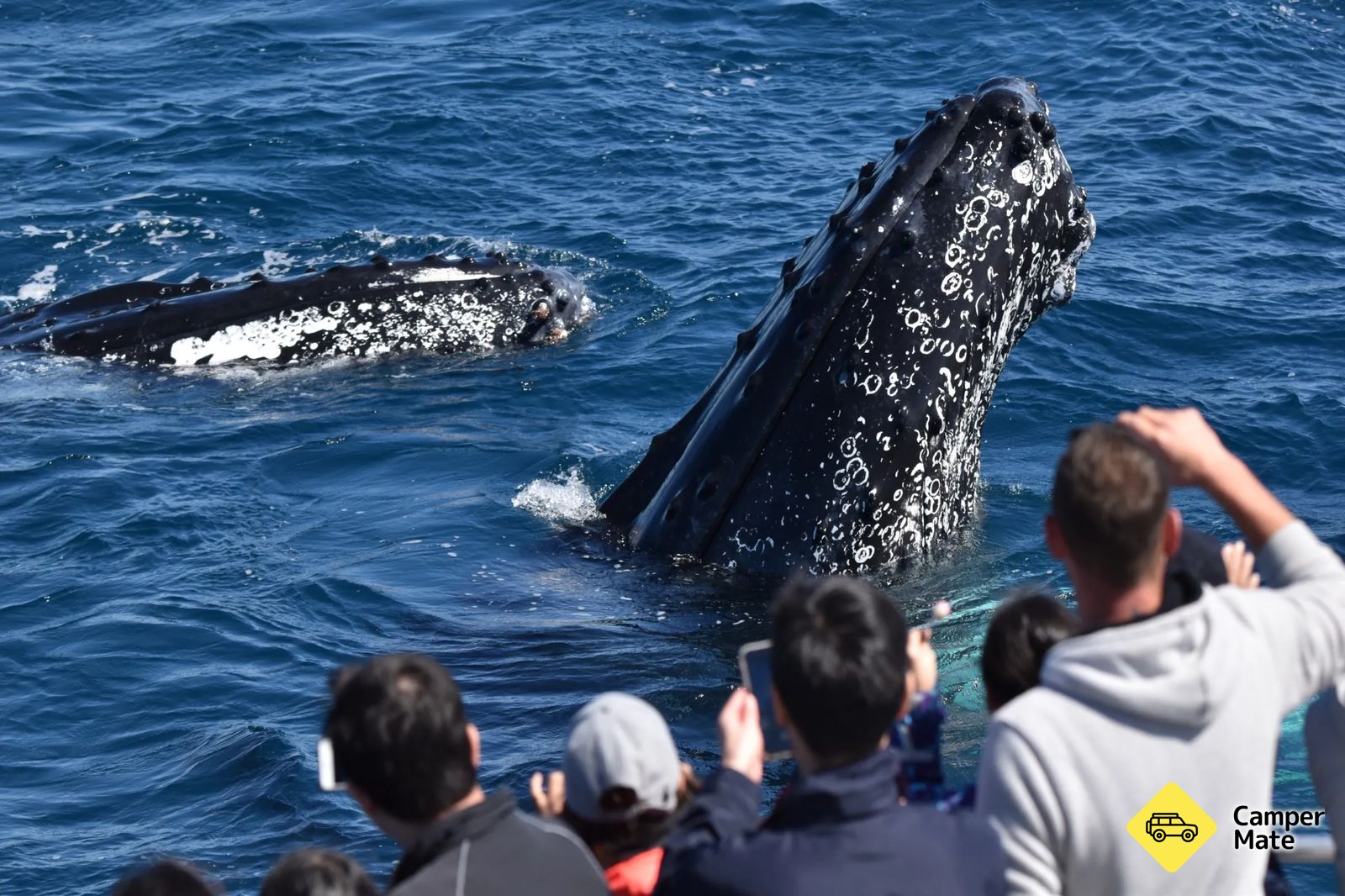
Best time: June to October
Albany is one of the most interesting whale-watching destinations in Western Australia because humpback and southern right whales can both be seen in the region.
Humpbacks pass through King George Sound during their migration, while southern right whales use the sheltered waters for breeding and raising calves.
From the coast, keep watch for breaching humpbacks, tail slaps and the distinctive broad tails of southern right whales.
Where to see whales:
Where to stay: Tasman Holiday Parks - Albany.
Victoria
Victoria's southern coastline is another winter destination for southern right whales, with one particularly accessible viewing location standing out.
Warrnambool
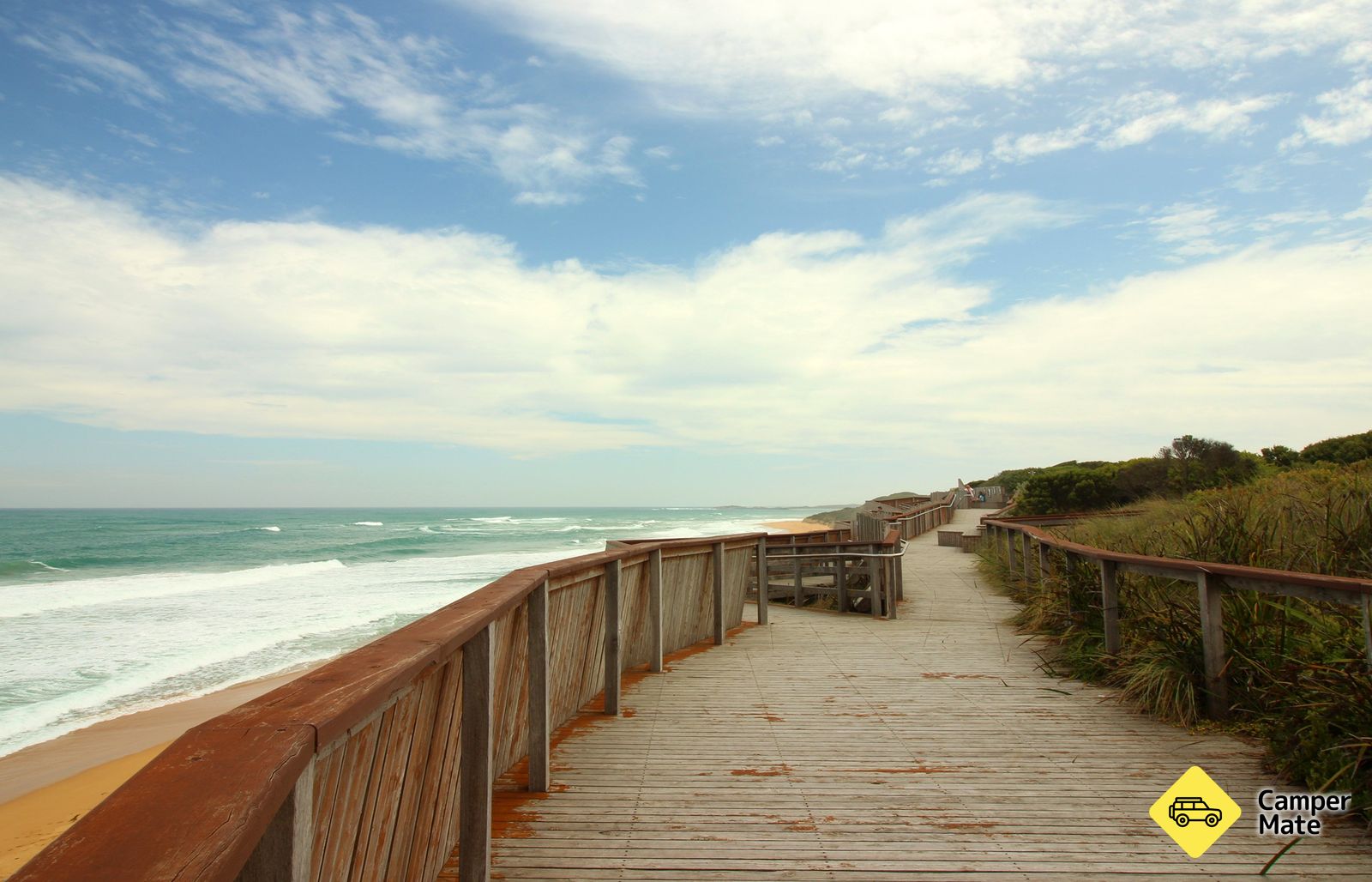
Best time: June to September, peaking in July and August
Every winter, southern right whales return to the waters off Warrnambool.
At Logan's Beach, females come close to shore to give birth and nurse their calves. A dedicated viewing platform overlooks the coastline, meaning you can potentially see these enormous whales without ever stepping aboard a boat.
On a good day, the whales can be remarkably close to the beach.
Where to see whales:
Best for: Easy, land-based whale watching with the chance to see mothers and calves.
Where to stay: Tasman Holiday Parks - Warrnambool.
Tasmania
Tasmania's east coast offers a different way to experience whale season: turn it into a road trip.
Tasmania's East Coast Whale Trail
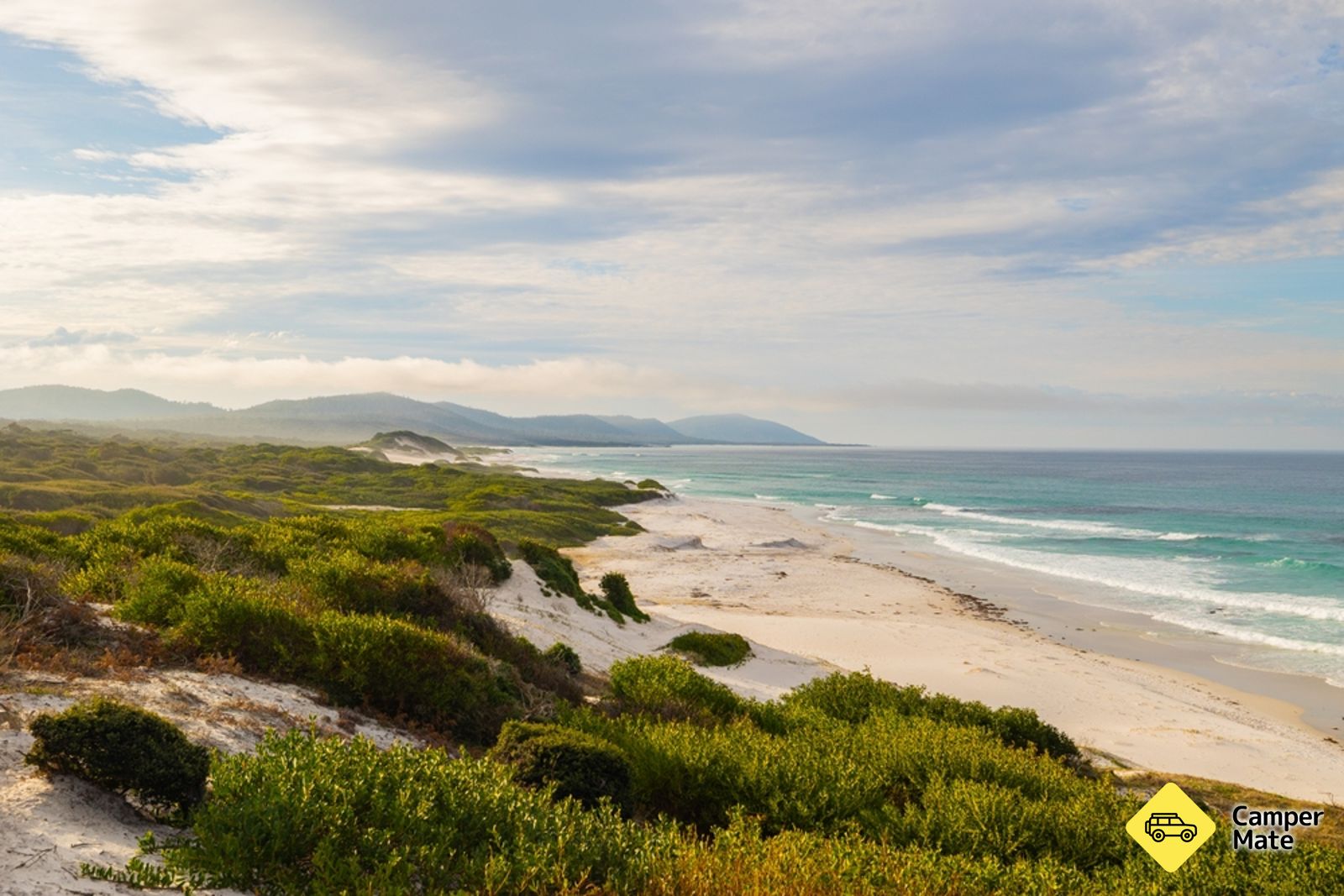
Best time: May to November
Stretching from the Bay of Fires in the north towards Eaglehawk Neck, Tasmania's East Coast Whale Trail connects 14 dedicated whale-watching locations.
Humpbacks and southern right whales are the main species to look for, although luckier visitors may spot other species, including orcas and blue whales.
The trail is ideal for road trippers because you can stop at different coastal viewpoints as you make your way along the east coast.
Where to see whales: Top Whale Trail Stops
- Cape Tourville Lighthouse
- Fluted Cape Walk
- Shelly Point
- The Gardens
- Friendly Beaches Scenic Lookout
- The Whale Trail Eaglehawk Neck Lookout
Best for: A self-drive whale-watching road trip through Tasmania.
Where to stay: Tasman Holiday Parks - St Helens
Boat or land? Choose your whale-watching adventure
Land-based whale watching is perfect for road trippers looking for a chance to see these amazing creatures. It's free, easy to add to an itinerary and means you can enjoy the surrounding coastline at the same time.
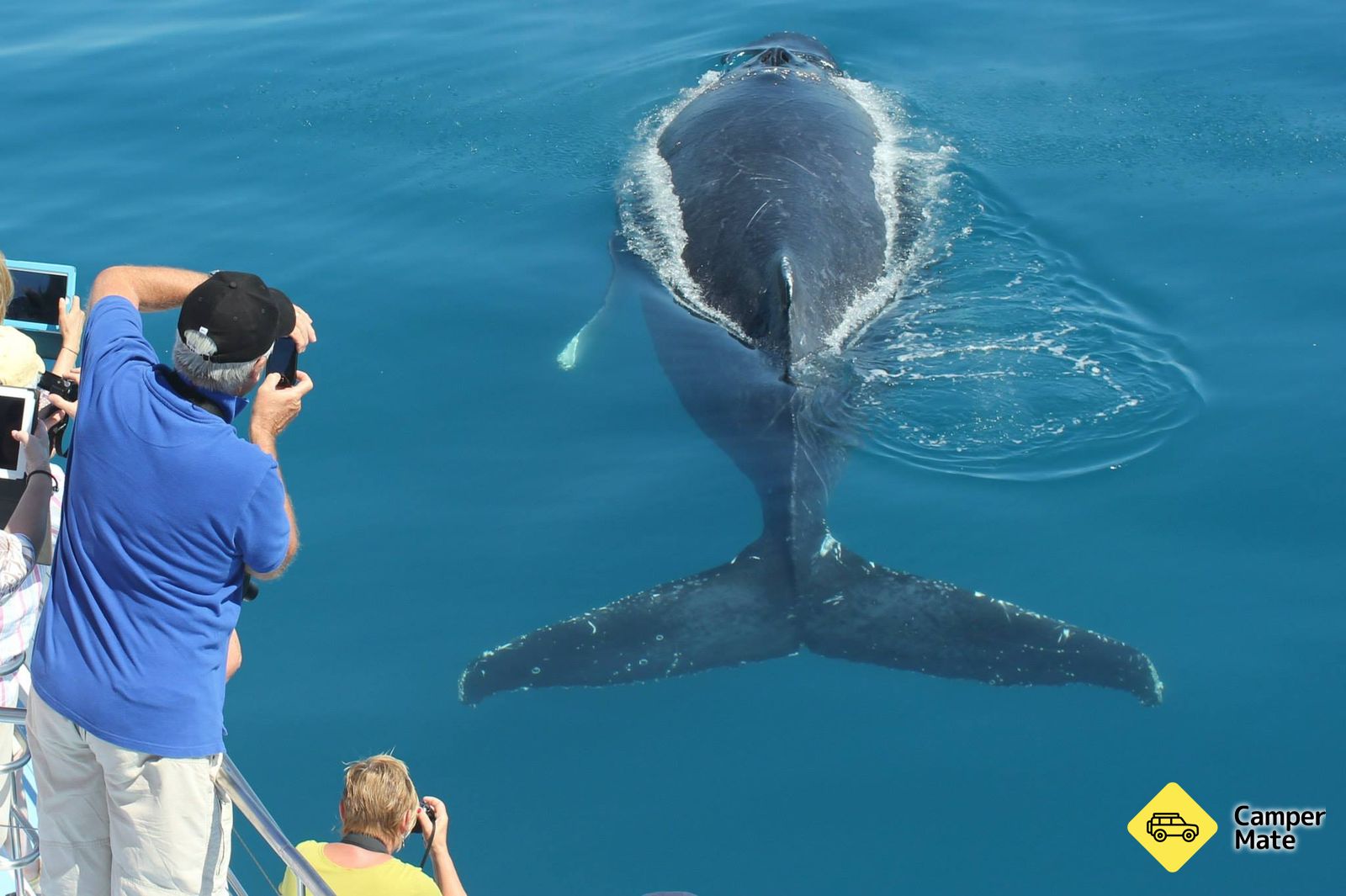
Boat tours give you a 90-100% chance of seeing whales and take you closer to the action, giving you a much better sense of just how enormous these animals are. Depending on the destination, you might see whales breaching beside the boat, travelling with calves or approaching out of curiosity.
It's not always about the best way to see a whale. Sometimes it's about the best way for you. It might be a quick pull in to a lookout to see a distant blow spotted from a clifftop. Sometimes it's a 15-metre humpback surfacing beside a boat. Each is its own adventure.
Either way, it's an encounter you'll remember.
Follow the whales this winter
From Queensland's tropical waters to the rugged cliffs of the Great Ocean Road, winter is an incredible time to explore Australia's coastline.
So, when you're planning your next winter road trip, don't just look at what's happening on land.
Look out to sea.
You might just find Australia's biggest wildlife encounter waiting for you.
Explore all the Whale Watching Tours on CamperMate
Guides and Blogs
Inspiration, suggestions, ideas, guides, and more!



Download Australia and New Zealand's #1 free road trip app
Install today and start planning your next holiday